What to Know About the November Full Beaver Supermoon
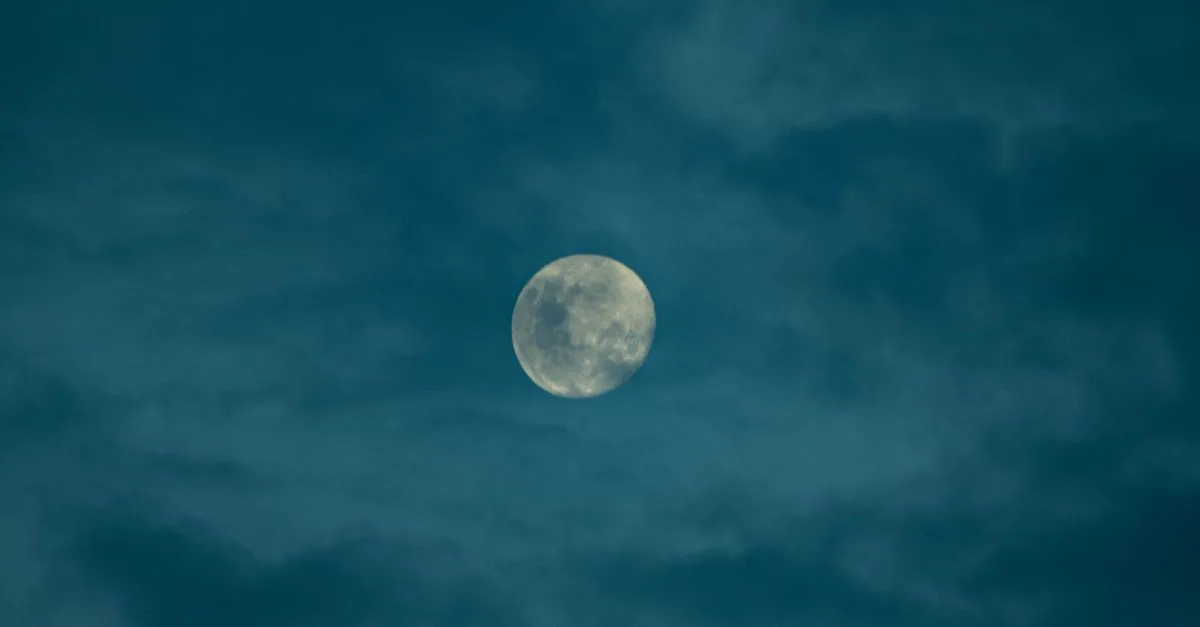
The November full moon, known as the Beaver Moon, is currently appearing as a supermoon, making it look larger and brighter than usual.
What we know
What happened
The November full moon, known as the Beaver Moon, is currently appearing as a supermoon, making it look larger and brighter than usual.
What is confirmed
- Single-source reporting The moon will appear 17% larger and 30% brighter than the smallest full moon of the year. Source: CNN
- Single-source reporting The term beaver moon refers to the time of year when beavers prepare for winter. Source: Space
- Single-source reporting A supermoon occurs when the moon's orbit brings it to its closest proximity to Earth while in the full phase. Source: Space
- Single-source reporting This event marks the first in a series of three consecutive supermoons. Source: Space
What is disputed or unclear
- Unclear The article notes that there is no specified unique Canadian trigger for the search interest regarding the supermoon. Source: CBC
What to watch next
- Official NASA astronomical updates
- Local weather reports for cloud cover
Verified: 3 independent outlets. How we count · Update log · About the sources
Why it matters
The Beaver Moon is a traditional name for the November full moon, commonly associated with the seasonal activities of beavers. Its status as a 'supermoon' is an astronomical classification based on the moon's perigee, or closest point to Earth in its orbit, which creates the illusion of increased size and brightness.
The full beaver supermoon is trending across Canada as stargazers prepare to view the first of three consecutive lunar events. As of November 25, 2026, the moon is approaching its peak illumination, appearing larger and brighter in the night sky due to its elliptical orbit bringing it closer to Earth.
Why it is trending now
Interest is peaking as the moon reaches its closest point to Earth, a phenomenon known as a supermoon. According to Noah Petro of NASA’s Goddard Space Flight Center, while the formal peak occurs during daylight hours on November 26, the moon will appear full and luminous to observers across Canada throughout the evenings of Tuesday and Wednesday.
Key facts
- The term "beaver moon" refers to the time of year when beavers prepare for winter, according to NASA.
- Kevin Lewis of Johns Hopkins University notes that the moon's elliptical orbit causes it to appear larger when it is at its closest point to our planet.
- Observers can expect the moon to be 17% larger and 30% brighter than the smallest full moon of the year, as reported by CNN.
- This event marks the first in a series of three consecutive supermoons.
Why this is trending in Canada
The notes do not specify a unique Canadian trigger for this search interest; however, the trend is part of a wider North American interest in the November celestial cycle.
Background and context
A supermoon occurs when the moon's orbit brings it to its closest proximity to Earth while in the full phase. Because the moon takes approximately 27.5 days to reach its closest point and 29.5 days to complete a full cycle of phases, these events can occur in consecutive sequences. This specific cycle is expected to continue with two more supermoons following this week's event.
What happens next
Observers should look for the moon during the evening hours of Tuesday and Wednesday to catch the best views. While the peak illumination occurs in the morning on November 26, the visual difference remains noticeable to the naked eye for several days. Future supermoons are expected to follow in the coming months as part of the current lunar sequence.
Frequently asked questions
What is a beaver supermoon?
A beaver supermoon is the November full moon that occurs when the moon is at its closest point to Earth in its elliptical orbit. This makes the moon appear about 17% larger and 30% brighter than it does during its smallest phase of the year.
When is the best time to see the supermoon in Canada?
Although the peak illumination is at 9:54 a.m. ET on November 26, the moon will appear full and bright throughout the evenings of Tuesday and Wednesday across Canada, providing optimal viewing conditions for observers.
Why is it called the Beaver Moon?
The name is a traditional nod to the time of year when beavers, known for their industrious dam-building, are actively preparing for the winter months.
Will there be more supermoons?
Yes. According to NASA, this is the first of three consecutive supermoons. The moon's orbital cycle allows for these events to happen in sequence as it returns to its closest point to Earth.
Do I need special equipment to see it?
No special equipment is required to view the supermoon. It will be visible to the naked eye, and observers who pay regular attention to the lunar cycle will notice the increased size and brightness compared to a typical full moon.
In this story
Sources
About the sources (3)
Details come from our source registry. Anything we have not checked says Unknown. How we classify sources
CBC [1]
- Country
- Canada (from the web address)
- Language
- Unknown
- Type
- Unknown
- Ownership
- Unknown
- Disclosure
- Not linked
- Reliability criteria
- Not yet reviewed by our editors
CNN [2]
- Country
- Unknown
- Language
- Unknown
- Type
- Unknown
- Ownership
- Unknown
- Disclosure
- Not linked
- Reliability criteria
- Not yet reviewed by our editors
Space [3]
- Country
- Unknown
- Language
- Unknown
- Type
- Unknown
- Ownership
- Unknown
- Disclosure
- Not linked
- Reliability criteria
- Not yet reviewed by our editors
Update log
- Published Story published.
Trend snapshot
- Topic
- Science
- Trending in
- Canada
- Search interest
- 2000+ recent searches
- Status
- Verified: 3 independent outlets How we count
- Last updated
- Nov 25, 2026 at 5:15 AM
Last checked Nov 25, 2026 at 5:15 AM. Trends move fast, so details may change. How we work · How we verify
Comments